Thursday, February 29, 2024

Exploring Precision: A Guide to 10mm Quartz Cuvettes with Stoppers

Introduction:

When it comes to scientific experimentation, accuracy is not only desirable but also necessary to provide results that can be trusted. Here are the humble but incredibly useful quartz 10 mm cuvettes with stoppers, which are essential for attaining accuracy in a wide range of scientific endeavors.

Starting the exploration of 10mm quartz cuvettes requires first realizing how crucial accuracy is to scientific research. These stopper-equipped cuvettes become essential instruments, guaranteeing the precision and dependability of analytical outcomes.

Navigating 10mm Quartz Cuvettes:

Understanding the features and dimensions of 10 mm quartz cuvettes with stoppers is key to appreciating their significance. The 10mm size offers unique advantages, making these cuvettes ideal for applications where precision is non-negotiable. The optical clarity and transparency inherent in quartz material contribute to meticulous sample analysis, leaving no room for ambiguity.

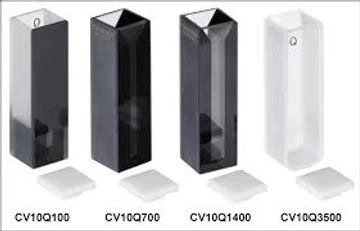
10mm Quartz Cuvettes with Stoppers

The Role of Stoppers in Precision:

Stoppers, often overlooked, play a pivotal role in enhancing the precision of cuvettes. By creating a sealed environment, stoppers contribute to the stability of the cuvette, preventing contamination and preserving sample integrity throughout the analytical process. Their small size belies their significance in ensuring the accuracy of scientific results.

UV Fused Quartz Cuvettes vs. Traditional Materials:

Comparing cuvette materials brings us to the spotlight on UV Fused Quartz Cuvettes. Its advantages over traditional materials, especially in terms of UV transparency, make it an invaluable asset in applications involving ultraviolet light. Researchers benefit from obtaining results without interference from the cuvette material itself, ensuring the highest level of accuracy.

Applications and Best Practices:

10 mm quartz cuvettes with stoppers find their place in a spectrum of scientific disciplines, from chemistry to life sciences. To optimize their performance, adhering to best practices in handling and cleaning is crucial. Proper care ensures the longevity of these cuvettes and maintains consistent performance across various laboratory settings.

Real-world Examples:

The efficacy of 10mm quartz cuvettes with stoppers is best illustrated through real-world examples. Case studies highlight instances where precision played a pivotal role in achieving ground breaking results. Whether in spectroscopy or chemical analysis, these cuvettes showcase their adaptability in diverse research areas.

Conclusion:

In conclusion, for those seeking precision in analytical processes, 10mm quartz cuvettes with stoppers emerge as reliable allies. Their optimal size, combined with the transparency of UV Fused Quartz Cuvettes, makes them indispensable tools for researchers demanding the utmost accuracy in their work. As we navigate the intricacies of scientific exploration, these cuvettes provide a clear path forward, ensuring that every experiment is conducted with the highest level of precision.

Monday, February 26, 2024

Exploring Nanomaterials: Iron Oxide Beads with Silica Coating vs. Non-functionalized Silica Nanoparticles

Introduction to Nanomaterials:

When we explore the nanoworld, we find a broad array of minuscule yet powerful materials that have the potential to transform a number of different industries. Among these, non-functionalized silica nanoparticles and iron oxide beads covered with silica stand out for their special qualities and uses. Knowing the differences between these two can help determine which is more suited for what.

Iron Oxide Beads Coated with Silica:


  • Overview: These are tiny particles with a core of iron oxide that is encased in a layer of silica. This combination harnesses the magnetic properties of iron oxide and the chemical stability of silica, making them a versatile choice for several applications.


  • Advantages: The core-shell structure of iron oxide beads coated with silica brings forth a blend of magnetic functionality and surface modifiability. This makes them ideal for tasks like magnetic separation in biotechnology, targeted drug delivery, and contrast agents in magnetic resonance imaging (MRI).


  • Considerations: Their utility is particularly pronounced in applications that benefit from magnetic properties, combined with the need for a stable, modifiable surface.

Non-functionalized Silica Nanoparticles:


  • Overview: In contrast, Non-functionalized silica nanoparticles 1m are simple, pure silica particles without any surface modifications or coatings. Their simplicity is their strength, offering a broad canvas for chemical modifications.


  • Advantages: The purity and versatility of non-functionalized silica nanoparticles make them suitable for a wide range of applications, including as carriers in drug delivery systems, in cosmetics, and various industrial applications requiring a silica base.


  • Considerations: Opting for these nanoparticles is advantageous when the application requires a straightforward silica material that can be customized through further chemical modifications.

    Iron oxide beads coated with silica
    Iron Oxide Beads Coated With Silica

Comparing and Choosing:


  • Application-Based Decision Making: The choice between iron oxide beads coated with silica and Non-functionalized silica nanoparticles 1m should be guided by the specific requirements of the project. Whether the need is for magnetic properties and surface modifiability or for a simple, versatile silica base will determine the most suitable option.


  • Aligning Material Properties with Goals: Matching the unique characteristics of each nanoparticle type to the desired outcomes of your project is crucial for maximizing their potential benefits.

Conclusion:

The decision to use iron oxide beads coated with silica versus Non-functionalized silica nanoparticles 1m involves strategic consideration of each material's properties and how they align with the project's goals. By understanding the distinct advantages of each, researchers and developers can make informed choices, leveraging the right nanomaterials to push the boundaries of innovation and application in their respective fields.

Monday, February 19, 2024

Sealed for Success: Ultraviolet Quartz Cells with PTFE Screw Caps and Septa Meet P-type Boron-doped SiO2 Thermal Oxide Wafers

Introduction to Ultraviolet Quartz Cells and SiO2 Thermal Oxide Wafers:

In the realm of scientific exploration, precision is key. When it comes to analyzing substances, ultraviolet quartz cells with PTFE caps and septa and P-type Boron-doped 200nm SiO2 thermal oxide wafers play pivotal roles. These components might sound complex, but they hold the power to unlock critical insights in various research fields.

Ultraviolet Quartz Cells with PTFE Screw Caps and Septa:

  • Overview: These cells are crafted from ultraviolet (UV) quartz, a material known for its exceptional transparency in the UV spectrum. The PTFE screw caps and septa provide an airtight seal to ensure the integrity of the sample within.

  • Advantages: Ultraviolet quartz cells with PTFE screw caps and septa excel in applications that require UV transparency and a sealed environment. They are indispensable in spectroscopy, where accurate measurements demand minimal interference from the container.

  • Considerations: These cells are the go-to choice when precision and UV transparency are paramount.

    Ultraviolet quartz cells with PTFE screw caps and septa
    Ultraviolet Quartz Cells With PTFE Screw Caps And Septa

P-type Boron-doped 200nm SiO2 Thermal Oxide Wafers:

  • Overview: These wafers are a mouthful, but they serve as the foundation for microelectronics and semiconductor devices. Composed of silicon dioxide (SiO2) doped with P-type Boron, they play a crucial role in the creation of electronic components.

  • Advantages: P-type Boron-doped 200nm SiO2 thermal oxide wafers offer excellent electrical insulation and are used extensively in semiconductor manufacturing. Their precise thickness and doping properties are vital for integrated circuits.

  • Considerations: These wafers are indispensable in the world of microelectronics and integrated circuits, where precision is non-negotiable.

Choosing Precision:

  • Tailoring to the Application: The choice between ultraviolet quartz cells with PTFE screw caps and septa, and P-type Boron-doped 200nm SiO2 thermal oxide wafers should be influenced by the specific requirements of the research or manufacturing process. Whether UV transparency or semiconductor precision is essential will determine the optimal choice.

  • Achieving Accuracy: Aligning the properties of these components with the desired outcomes of experiments or manufacturing processes is the key to success.

Conclusion:

The decision to use ultraviolet quartz cells with PTFE screw caps and septa or P-type Boron-doped 200nm SiO2 thermal oxide wafers is more than a mere selection—it's a strategic move that impacts the success of scientific experiments and technological advancements. By understanding the unique advantages of each component, researchers and engineers can make informed choices that lead to precision, reliability, and innovation in their respective fields.

Wednesday, February 7, 2024

Iron Oxide Beads Coated With Silica – Providing A Multitude Of Applications

In the dynamic field of nanotechnology, the marriage of different materials often leads to the creation of hybrid structures with enhanced properties.

A Magnetic Symphony with a Protective Shield

  1. Magnetic Core for Attractive Applications

The core of these hybrid beads consists of iron oxide, endowing them with magnetic properties. This magnetic core opens the door to a multitude of applications, including targeted drug delivery, magnetic resonance imaging (MRI) contrast agents, and magnetic separation techniques. The ability to manipulate these beads with external magnetic fields provides researchers with a precise and controlled tool for various biomedical and industrial purposes.

  1. Silica Coating: Protecting the Core and Enhancing Functionality

The silica coating serves as a protective shield for the iron oxide core, preventing oxidation and degradation. Beyond protection, the silica layer allows for the functionalization of the beads with different molecules. This functionality is crucial in tailoring the beads for specific applications, such as targeted drug delivery, where the outer surface can be modified to interact with specific cells or tissues.

  1. Biocompatibility and Stability

The Iron oxide beads coated with silica results in a material that is not only magnetic but also biocompatible and stable. These features make them suitable for use in biological and medical applications, where the need for compatibility with living systems is paramount. The stability ensures the longevity of the beads in various environments, expanding their usability in both research and practical applications.

The Unsung Heroes of Nanoscale Precision

  1. Unaltered Purity at the Nanoscale

The Non-functionalized silica nanoparticles 1�m, retain the inherent properties of silica without any additional functional groups. This simplicity becomes a strength, allowing these particles to act as versatile building blocks for a range of applications. Researchers appreciate the unaltered purity when studying fundamental interactions at the nanoscale.

  1. Versatility in Material Sciences

These nanoparticles find applications in material sciences, serving as additives to enhance the mechanical and thermal properties of polymers and composites. The small size and high surface area of the nanoparticles contribute to the improvement of material characteristics, making them valuable components in the development of advanced materials with tailored functionalities.

Iron Oxide Beads Coated With Silica

  1. Efficient Carrier Systems

In drug delivery and imaging applications, non-functionalized silica nanoparticles can serve as efficient carriers due to their tunable size and surface area. Their biocompatibility and low toxicity make them suitable for use in medical applications where unaltered particles are preferred.

The fusion of Iron oxide beads coated with silica and Non-functionalized silica nanoparticles 1�m exemplifies the synergistic potential of hybrid materials in the world of nanotechnology. From targeted drug delivery to material enhancements, these versatile structures and particles contribute to the precision and advancement of scientific research and applications.

Thursday, February 1, 2024

Temperature-Resistant Quartz Crucibles, Boats And Plates

In the intricate world of laboratories and scientific research, the tools used are as crucial as the experiments conducted.

The Temperature-Resistant quartz crucibles, boats and plates, stand as exemplary instruments that withstand extreme conditions while contributing to precision in various scientific processes.

Forging Precision in Heat

  1. Quartz Crucibles: The Crucible of Innovation

Quartz crucibles, crafted from high-purity quartz, stand as resilient vessels designed to endure extreme temperatures. Their exceptional resistance to thermal shock and high melting points makes them invaluable in processes such as metal casting, chemical synthesis, and crystal growth. Researchers and technicians rely on quartz crucibles to contain and manipulate substances at temperatures that would render traditional materials ineffective.

  1. Quartz Boats: Navigating the Heat with Precision

Quartz boats, slender vessels with a boat-shaped design, find application in processes that require precise sample placement and controlled heating. These boats excel in high-temperature environments, making them indispensable for activities like thermal evaporation and chemical vapor deposition. Their inert nature ensures minimal interference with the substances being processed, maintaining the integrity of experiments.

  1. Quartz Plates: The Foundation of Heat-Resistant Platforms

Quartz plates, flat and durable, serve as foundational platforms for a myriad of laboratory processes. Whether supporting delicate samples in high-temperature applications or acting as a substrate for thin film deposition, these plates provide stability and resilience. The optical transparency of quartz also enables researchers to observe reactions or changes in materials during experiments.

Precision in Every Bead

  1. Uniformity in Size and Shape

The Laboratory borosilicate glass beads 3mm, embody precision in their uniform size and shape. This consistency is paramount in applications such as chromatography, where beads act as a solid phase support for various separation techniques. The uniformity ensures reproducibility and accuracy in experimental results.

  1. Thermal and Chemical Stability

Borosilicate glass, known for its excellent thermal and chemical stability, makes these beads ideal for a range of laboratory processes. They can withstand high temperatures without undergoing deformation or releasing contaminants into the sample. This stability is crucial in applications like heating baths and as filler material in distillation columns.

  1. Versatility in Applications

The Laboratory borosilicate glass beads 3mm versatility extends to diverse applications, including cell culturing, sample homogenization, and precision mixing. Their inert nature makes them suitable for use with a variety of chemicals and biological substances without introducing unwanted interactions.

Temperature-Resistant Quartz Crucibles, Boats And Plates

The Temperature-Resistant quartz crucibles, boats and plates, alongside laboratory borosilicate glass beads, are silent heroes in the laboratory, providing the stability and resilience necessary for groundbreaking experiments. As science continues to push boundaries, these precision instruments remain steadfast, facilitating discoveries that shape our understanding of the world. In the crucible of scientific innovation, these temperature-resistant materials and glass beads stand as testament to the meticulous craftsmanship and engineering that propels us forward into the realms of the unknown.

Monday, January 29, 2024

Silica Nanoparticles – Using This Versatile Entity In Labs

In nanotechnology, nanoparticles have emerged as versatile and powerful entities with a myriad of applications. Among them, magnetic nanoparticles stand out, combining the unique properties of silica with the responsiveness to external magnetic fields.

Silica nanoparticles are minute particles composed primarily of silicon dioxide, the same compound found in quartz and sand. Their nanoscale size, typically ranging from 1 to 100 nanometers, imparts distinctive properties that make them exceptional candidates for diverse applications.

  1. Biomedical Marvels: The Silica nanoparticles have garnered significant attention in the field of medicine. Their biocompatibility, low toxicity, and ease of functionalization have made them ideal candidates for drug delivery systems, imaging agents, and applications. Researchers are exploring the potential of silica nanoparticles to target specific cells, release drugs in a controlled manner, and enhance medical diagnostics.

  2. Precision Engineering: These nanoparticles find applications in various industries, including electronics, catalysis, and materials science. Their ability to act as catalyst supports, reinforcing agents, or templates for the synthesis of other nanomaterials makes them indispensable in the development of advanced materials with tailored properties.

It is a hybrid of silica and magnetic materials like iron oxide, bring an additional dimension to the already impressive attributes of silica nanoparticles. These nanoparticles exhibit super paramagnetic behavior, meaning they become magnetic in the presence of an external magnetic field and lose their magnetization when the field is removed.

  1. Biomedical Imaging: In the realm of medical diagnostics, Magnetic Silica Nanoparticles offer a magnetic resonance imaging (MRI) contrast enhancement. When functionalized with specific targeting molecules, these particles can be directed to specific tissues or cells, allowing for highly precise and targeted imaging. This holds great promise for early disease detection and personalized medicine.


    Silica nanoparticles
    Silica Nanoparticles

  2. Targeted Drug Delivery: This can be guided to specific areas within the body using external magnetic fields. This targeted drug delivery system minimizes side effects by ensuring that therapeutic agents reach the intended site with precision. The ability to remotely control the nanoparticles' movement within the body opens up new possibilities for localized and efficient drug delivery.

  3. Environmental Cleanup: Beyond the realm of medicine, Magnetic Silica Nanoparticles play a crucial role in environmental remediation. Their magnetic properties enable them to be easily separated from complex mixtures, making them effective tools for the removal of pollutants from water and soil. Applications include the removal of heavy metals, organic pollutants, and oil spills.

The Silicananoparticles and their magnetic counterparts represent a groundbreaking convergence of materials science, chemistry, and physics. Their unique properties and the ability to tailor them for specific applications have sparked a wave of innovation across various industries, from medicine to environmental science.

Monday, January 22, 2024

Using Non-Functionalized Or Carboxyl Polystyrene Microparticles


In the vast landscape of nanotechnology, the spotlight often falls on particles that are minuscule in size but mighty in impact.

Size Consistency: Non-functionalized polystyrene microparticles boast precise and uniform sizes, crucial for consistent behavior in different applications.

Chemical Stability: The inherent stability of polystyrene makes these microparticles resistant to chemical changes, ensuring reliability in experimental conditions.

Inert Surface: Non-functionalized polystyrene microparticles have an inert surface, making them versatile for a range of applications without unwanted interactions.

Biological Research: These microparticles are widely used as model systems in biological research, simulating the behavior of cells and aiding in the development of diagnostic assays.

Flow Cytometry Standards: The Non-functionalized or carboxyl polystyrene microparticles serve as standards in flow cytometry, providing a reference for the calibration and validation of flow cytometers.

Colloidal Studies: Researchers use these microparticles to investigate colloidal behavior, providing insights into the fundamental principles of particle interactions in various environments.

The incorporation of magnetic components into silica nanoparticles introduces a magnetic response, enabling manipulation and targeting in applications like drug delivery.

Surface Functionalization: Carboxyl groups on the surface of these nanoparticles allow for easy modification with biomolecules, facilitating targeted drug delivery and imaging applications.

Biocompatibility: Magnetic silica nanoparticles are generally biocompatible, making them suitable for use in biological and medical applications.

Drug Delivery: The Carboxyl-functionalized magnetic silica nanoparticles are employed in drug delivery systems, enabling targeted delivery of therapeutic agents to specific cells or tissues.

Magnetic Resonance Imaging (MRI): These nanoparticles are used as contrast agents in MRI, enhancing imaging capabilities and providing detailed information about specific biological structures.

Environmental Remediation: Magnetic silica nanoparticles find applications in environmental remediation, aiding in the removal of contaminants from water and soil through magnetic separation processes. 

Non-functionalized or carboxyl polystyrene microparticles
Non-functionalized Or Carboxyl Polystyrene Microparticles

Synergistic Applications:

Combining Strengths: Non-functionalized polystyrene microparticles and carboxyl-functionalized magnetic silica nanoparticles offer a powerful combination, addressing diverse needs in research and application.

Versatile Toolkit: Researchers can leverage the versatility of these nanoparticles to create a toolkit that spans colloidal studies, biomimicry, drug delivery, and diagnostic applications.

The world of Non-functionalized or carboxyl polystyrene microparticles and silica nanoparticles is a testament to the incredible versatility and impact of nanotechnology. As these particles continue to shape advancements in biomedicine, materials science, and environmental applications, the synergy between them opens new avenues for exploration and discovery. The nanoworld, once invisible to the naked eye, now stands as a frontier where precise particles play a pivotal role in expanding our understanding and capabilities across various scientific disciplines.

Top of Form

Top of Form